
Kerameikos Ancient Cemetery of Athens Archaeology Site and Museum
One of the most beautiful and least visited of the archaeological sites in downtown Athens is Kerameikos, the ancient cemetery of Athens. |
|
I actually am ashamed to say that having lived in Athens and visited on and off for over 30 years, before this winter I had never been there. But since my brother's fiance's sister (actually my brother's ex-fiance's sister now) was the archaeologist in charge of the site, I felt it was my family duty to take a walk down there, introduce myself and take some pictures for the Athens Guide as well. I never found her. So I wandered around the ruins instead and had a profound experience. |
|
Within the site are the ancient walls of Athens and the Sacred Gate which was only used by pilgrims from Eleusus using the sacred road to and from that site during the annual procession. Nearby is the Dipylon gate which was the main entrance to the city, where the Panathenaic procession began and where the prostitutes congregated so they could make themselves available to weary travelers. It was from this spot that Pericles gave what was probably his most well-known speech honoring those who had died in the first year of the Peloponesian war. |
|
|
|
|
|
What are these things? |
|
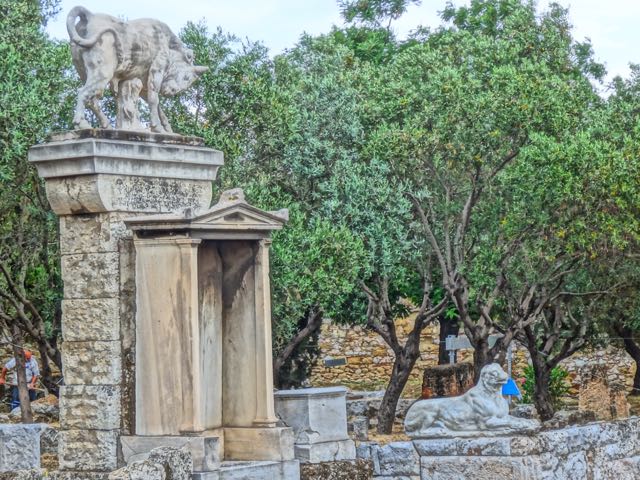
Marble Bull in the plot of Dionysious from Kolytos |
|
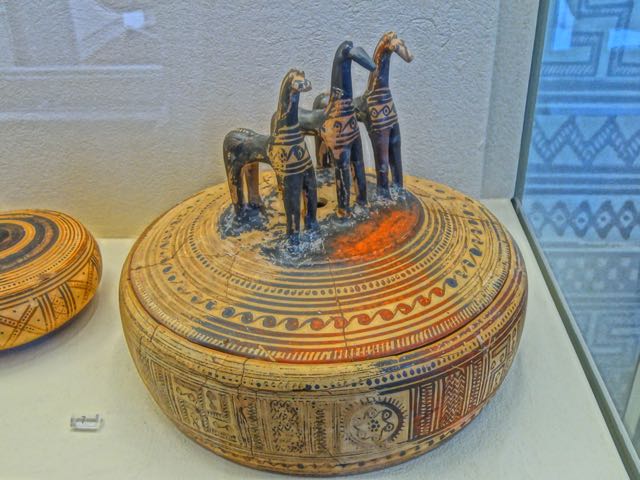
Don't miss the museum! Lots of great pottery as you might expect from a place called Kerameikos. |
See My 2015 Kerameikos Photos |
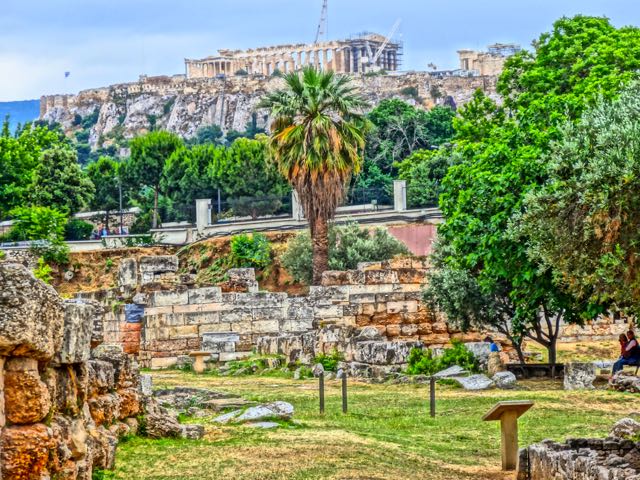 Kerameikos
was on the northwest fringe of the
ancient city and and is now the outer
edge of the areas visited by most
travelers. But if you follow Ermou
street down from the
Kerameikos
was on the northwest fringe of the
ancient city and and is now the outer
edge of the areas visited by most
travelers. But if you follow Ermou
street down from the 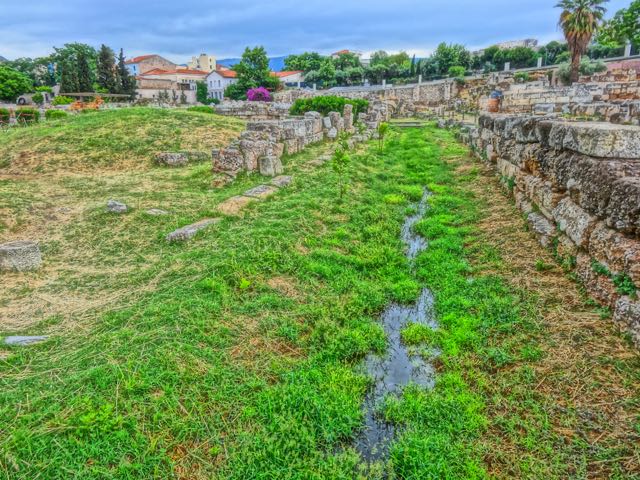 When
you visit Greece in the summer, the
ground around the ancient stones has
been baked by the sun and anything
that was alive is as brown as the
dirt. But in the winter when it rains
everything is covered in grass and
moss and it gives you a strange
feeling like you are in Ireland, in
some remains of an ancient Greek or
Roman
colony
. And since the summer crowds are at home
you can have places like Kerameikos to yourself.
When
you visit Greece in the summer, the
ground around the ancient stones has
been baked by the sun and anything
that was alive is as brown as the
dirt. But in the winter when it rains
everything is covered in grass and
moss and it gives you a strange
feeling like you are in Ireland, in
some remains of an ancient Greek or
Roman
colony
. And since the summer crowds are at home
you can have places like Kerameikos to yourself.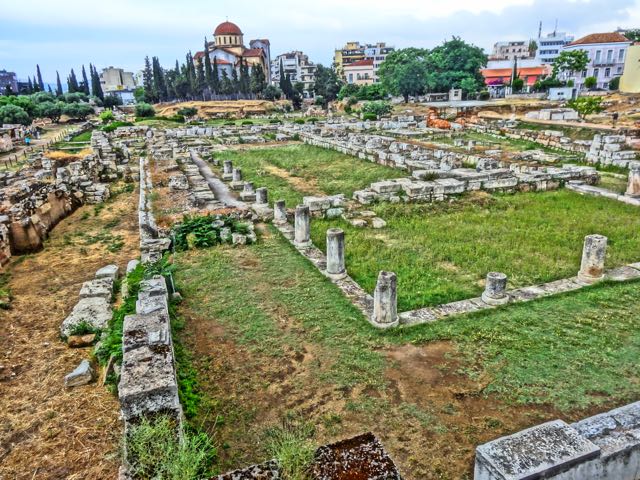 Between
the two gates is the Pompeion, where
the preparations were made for the
Panathenaic procession which was in
honor of Athena. The building was
completely destroyed in 88 BC and a 3
aisled building called the Building of
the Warehouses was erected in it's
place in the 2nd century AD. The
church of Agia Triada is in the
background. The Eridanos river which
once passed through the Sacred gate
still flows beneath the site. It was
covered by the Romans. On the Street of
Tombs you can see replicas of the gravestones of some of Athens
most prominent citizens. The originals are in the
Between
the two gates is the Pompeion, where
the preparations were made for the
Panathenaic procession which was in
honor of Athena. The building was
completely destroyed in 88 BC and a 3
aisled building called the Building of
the Warehouses was erected in it's
place in the 2nd century AD. The
church of Agia Triada is in the
background. The Eridanos river which
once passed through the Sacred gate
still flows beneath the site. It was
covered by the Romans. On the Street of
Tombs you can see replicas of the gravestones of some of Athens
most prominent citizens. The originals are in the 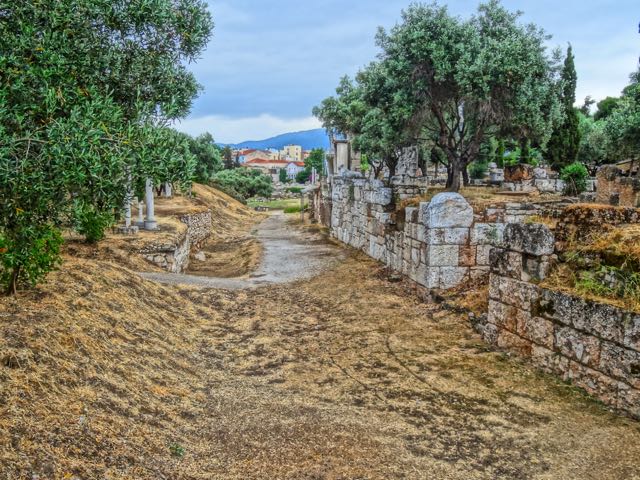 Kerameikos is open from Tuesday to
Sunday from 8am to 3pm. Also check out the
new Benaki Museum and the Ceramics Museum all in the same neighborhood. Other places of interest nearby include the Jewish Synogogue and the Hammam (Turkish baths).
Unlike the one in the Plaka this is a working Hammam so you can actually take a bath, though it may be the most expensive bath you have ever taken. If is is lunch or later you are within a couple blocks of my favorite
restaurants in
Kerameikos is open from Tuesday to
Sunday from 8am to 3pm. Also check out the
new Benaki Museum and the Ceramics Museum all in the same neighborhood. Other places of interest nearby include the Jewish Synogogue and the Hammam (Turkish baths).
Unlike the one in the Plaka this is a working Hammam so you can actually take a bath, though it may be the most expensive bath you have ever taken. If is is lunch or later you are within a couple blocks of my favorite
restaurants in 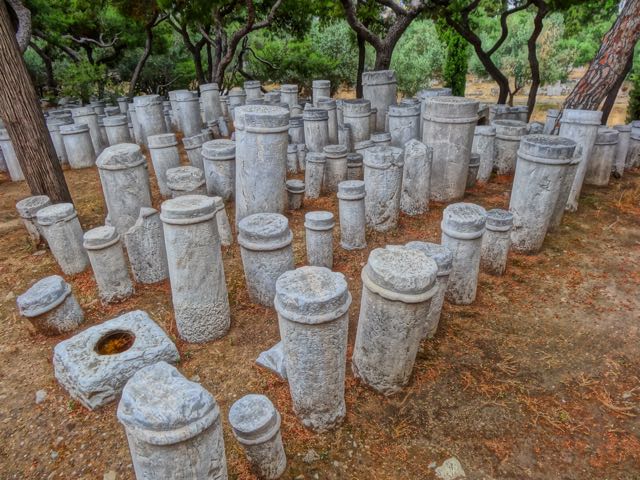
|
|
|
|




Help Support Matt's Greece Guides
Do you enjoy using my site? Have you found it entertaining as well as useful? If so please show your appreciation by booking hotels through the travel agencies and the links found on my Hotels of Greece site. The small commission I make on the bookings enable me to keep working and in most cases you won't find them any cheaper by searching elsewhere.
If you are appreciative of all the free information you get on my websites you can also send
a donation through Paypal or Venmo
Join Matt Barrett's Greece Travel Guides Group on Facebook for comments, photos and other fun stuff. If you enjoy this website please share it with your friends on Facebook and other social media.
